
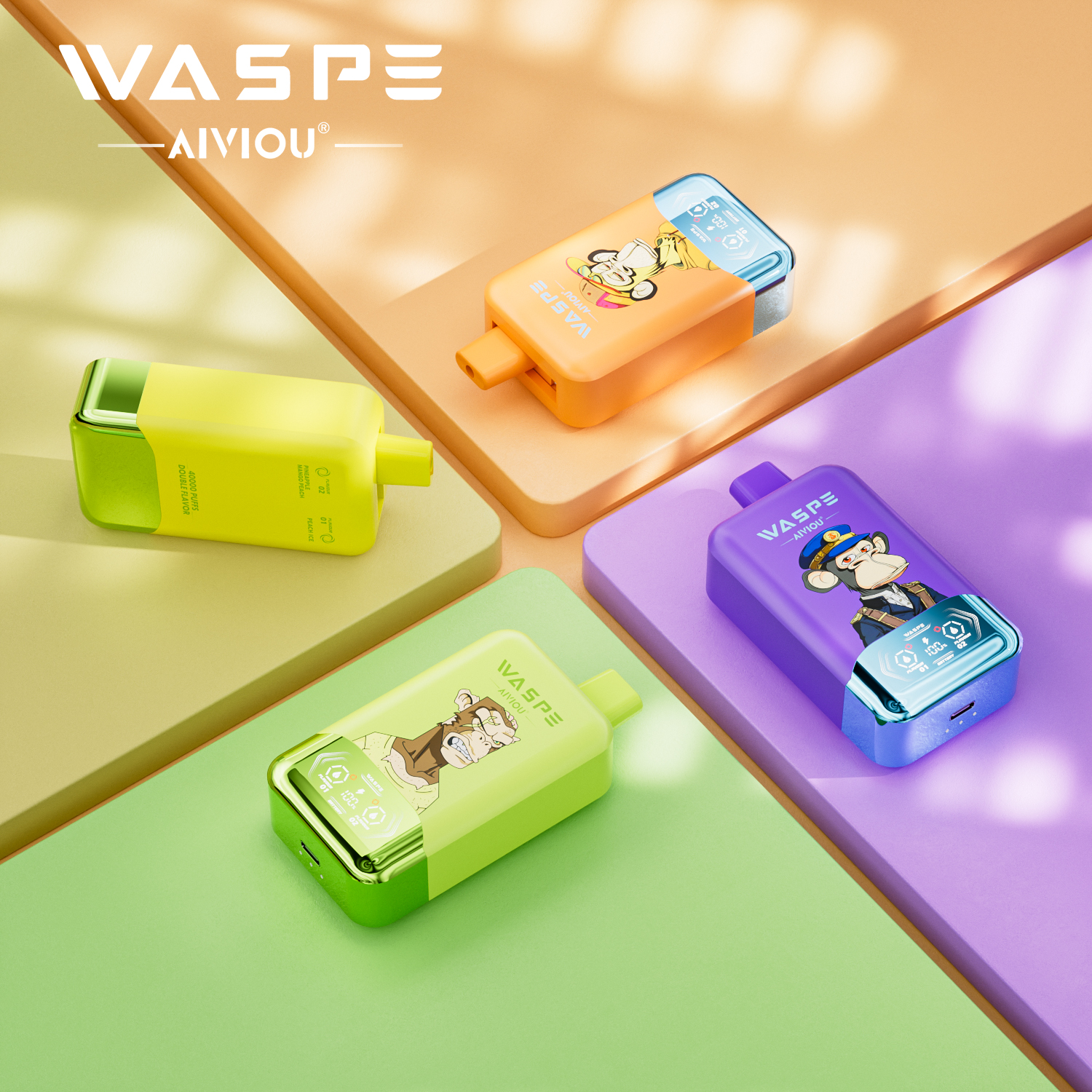
The choice of material for e-cigarette mouthparts directly affects user experience, health and safety, and the durability of the device. The following analysis is conducted from four aspects: material classification, characteristic comparison, potential risks, and selection suggestions:
First, classification of common cigarette tip materials
Plastic category
Polycarbonate (PC) : It has high transparency and strong impact resistance, and is often used in entry-level products. However, it may release bisphenol A (BPA) at high temperatures.
Polypropylene (PP) : It has relatively good heat resistance (melting point above 160℃), strong chemical stability, but low hardness and is prone to wear.
Food-grade silicone: Soft and skin-friendly, it can relieve the uncomfortable feeling when used for a long time, but it is prone to absorbing odors and has average heat resistance (about 200℃).
Metals
Stainless steel (304/316L) : Corrosion-resistant and easy to clean, it is the mainstream choice for mid-to-high-end products, but its fast heat conduction may cause scalding of the mouth.
Aluminum alloy: Lightweight design, but the surface is prone to oxidation and requires anodic oxidation treatment to enhance durability.
Ceramics
Zirconia ceramics: They have high hardness, wear resistance, a smooth surface that is easy to clean, but they are relatively expensive and brittle, prone to cracking.
Natural material
Solid wood: It has a warm and smooth texture, but it needs to be coated to prevent moisture and mold, and it may release harmful substances at high temperatures.
Bamboo: Environmentally friendly and renewable, but it is prone to cracking and deformation and requires regular maintenance.
Second, potential risks and health impacts
Plastic material
Bisphenol A (BPA) : PC material may release BPA at high temperatures, which can interfere with the endocrine system. The European Union has restricted its use in food contact materials.
Phthalates: Some plastics are added with plasticizers. Long-term exposure may affect the reproductive system.
Metal material
Heavy metal leaching: Inferior stainless steel may contain heavy metals such as nickel and chromium. Food-grade materials (such as 316L) should be selected.
Allergy risk: Some users are allergic to metals and should avoid direct contact.
Natural material
Formaldehyde release: Solid wood or bamboo may release formaldehyde at high temperatures. It is necessary to choose products without adhesives or coatings.
Mold growth: Natural materials are prone to moisture absorption and need to be cleaned and disinfected regularly.
Third, suggestions for material selection
Health first
Choose food-grade materials (such as PP, 316L stainless steel, zirconia ceramics), and avoid plastics containing BPA or plasticizers.
Natural materials must ensure no chemical treatment and that the user has no history of allergies.
Usage scenario adaptation
High-frequency use: Stainless steel or ceramic is recommended as they are wear-resistant and easy to clean.
Portability requirements: Lightweight design is available in either aluminum alloy or silicone, but attention should be paid to high-temperature resistance.
Taste experience: Ceramic cigarette butts can reduce the interference of metallic flavors and are suitable for users who pursue a pure taste.
Maintenance cost
Plastic and silicone materials have low costs, but they need to be replaced regularly. Ceramic and metal materials are highly durable, but the initial investment is relatively large.
Environmental protection considerations
Natural materials (such as bamboo) and recyclable metals (such as aluminum alloy) are more environmentally friendly, but a balance needs to be struck between their service life and resource consumption.
Fourth, summary and recommendation
Entry-level users: Give priority to PP plastic or food-grade silicone, taking into account both cost and safety.
For mid-to-high-end users: 316L stainless steel or zirconia ceramic is recommended to enhance durability and taste experience.
Special requirements: For those allergic to metals, ceramic or solid wood can be selected (ensure there is no coating). Environmentalists can choose bamboo or recyclable metals.
The final choice should be based on health and safety, usage scenarios, budget and personal preferences, avoiding blindly pursuing low prices or high appearance standards while ignoring material risks.